


Hajime Nakatomi
Praying for good luck
Its shape and color foreshadow us.
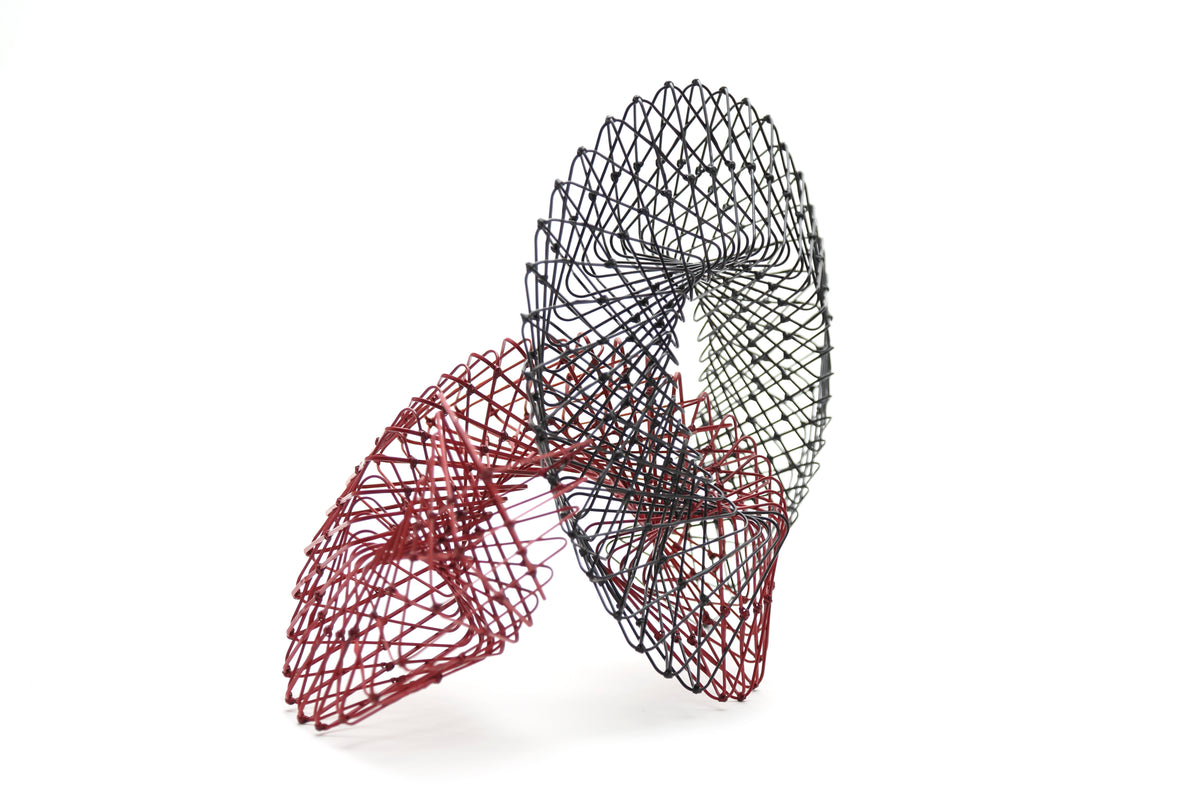
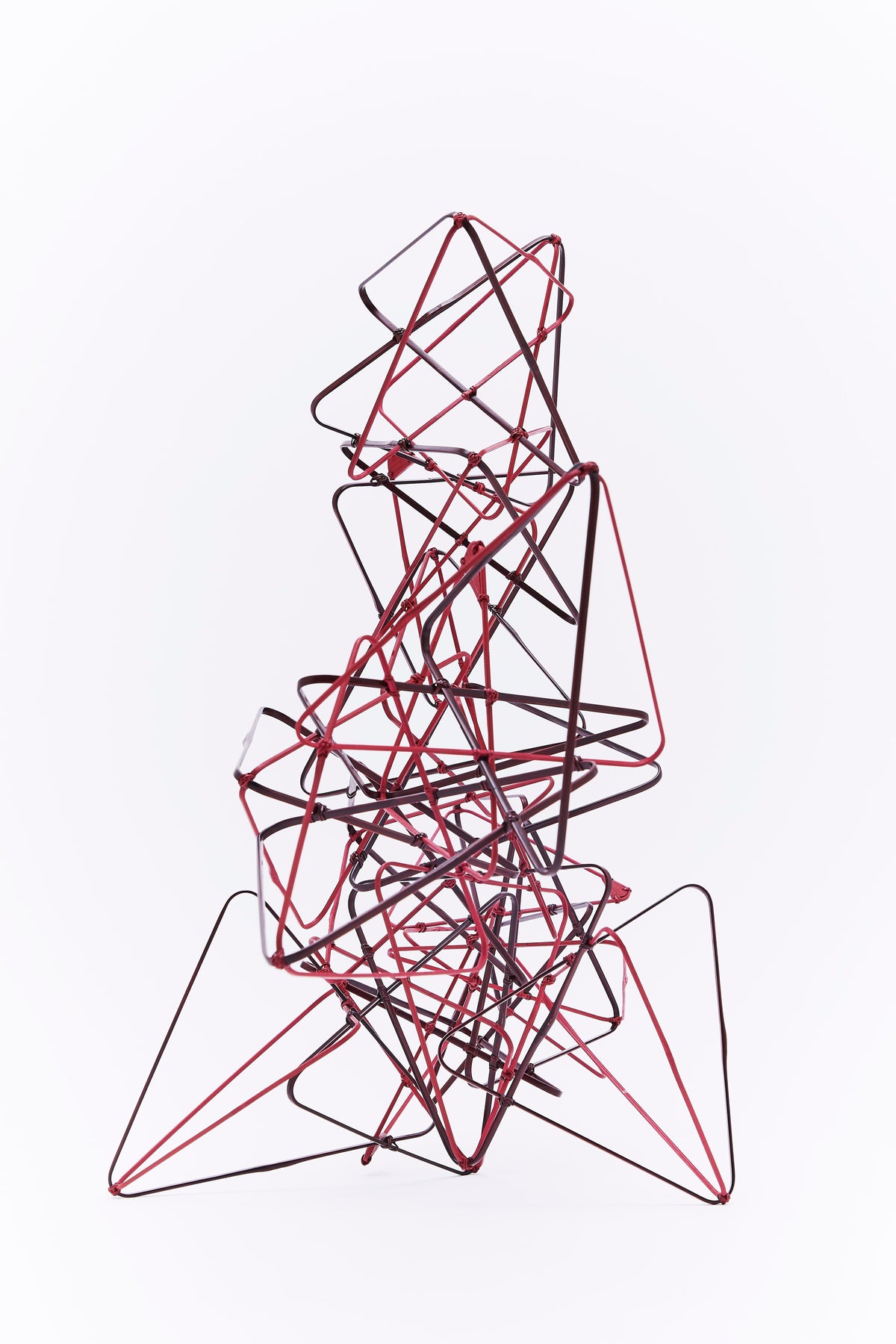
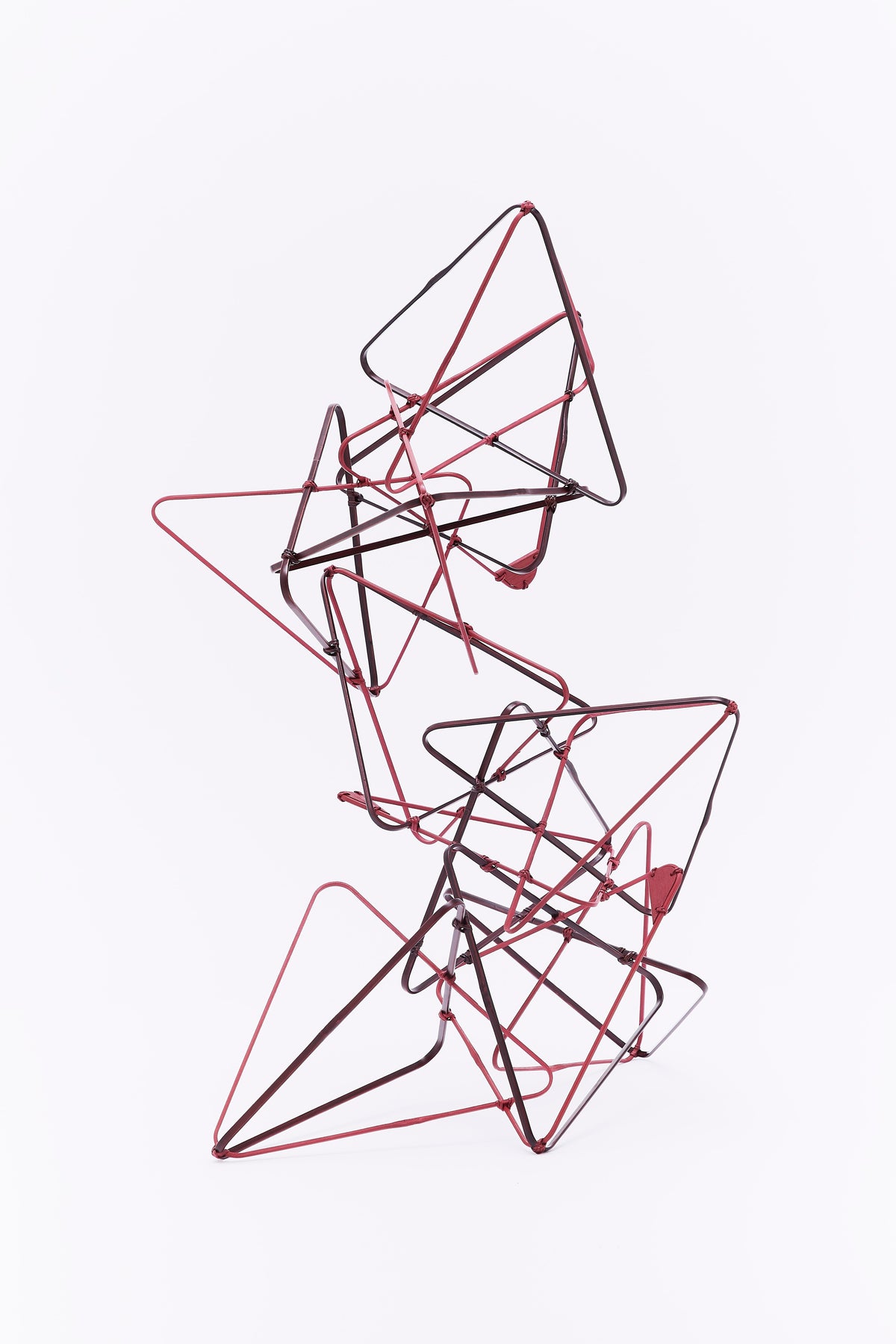
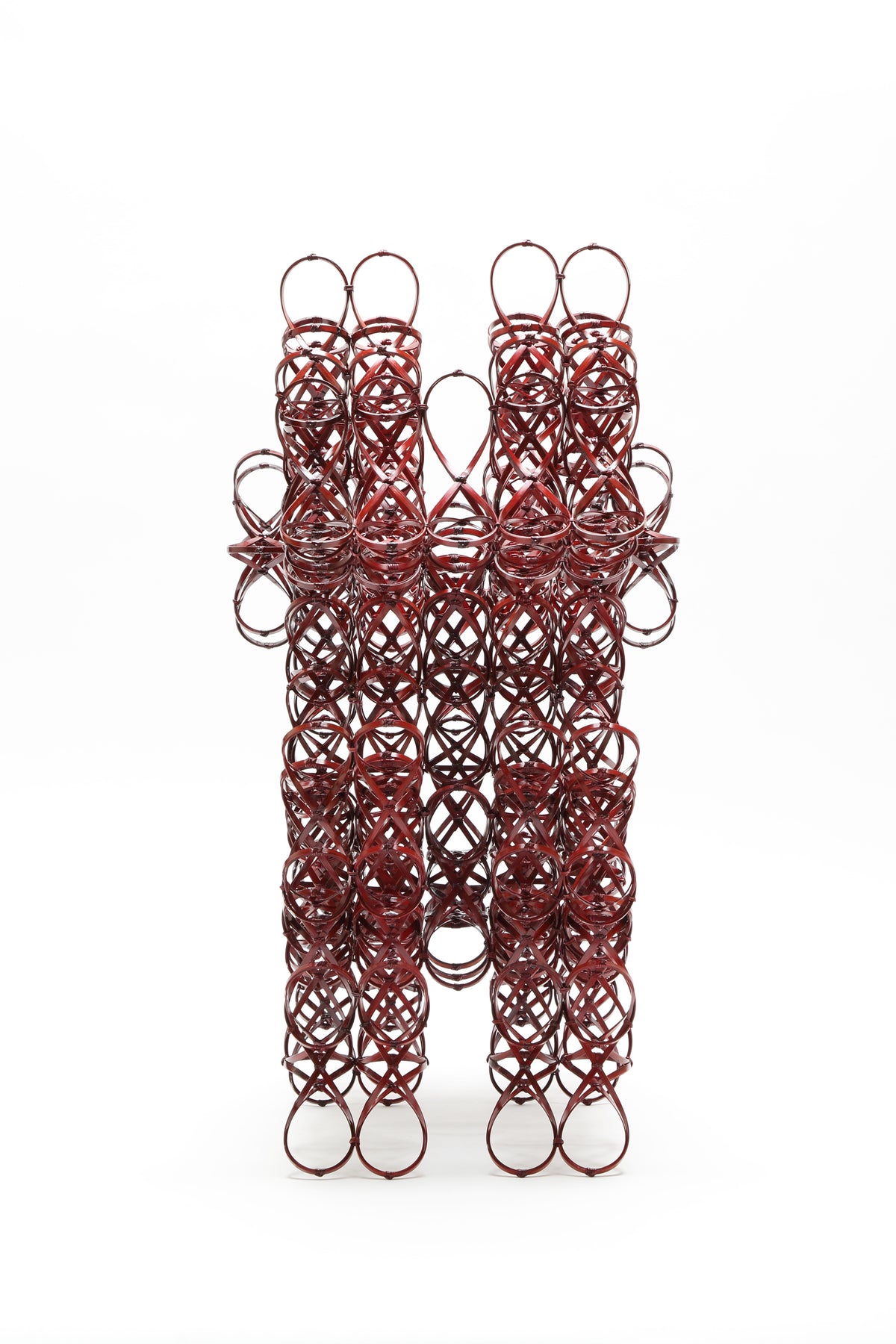
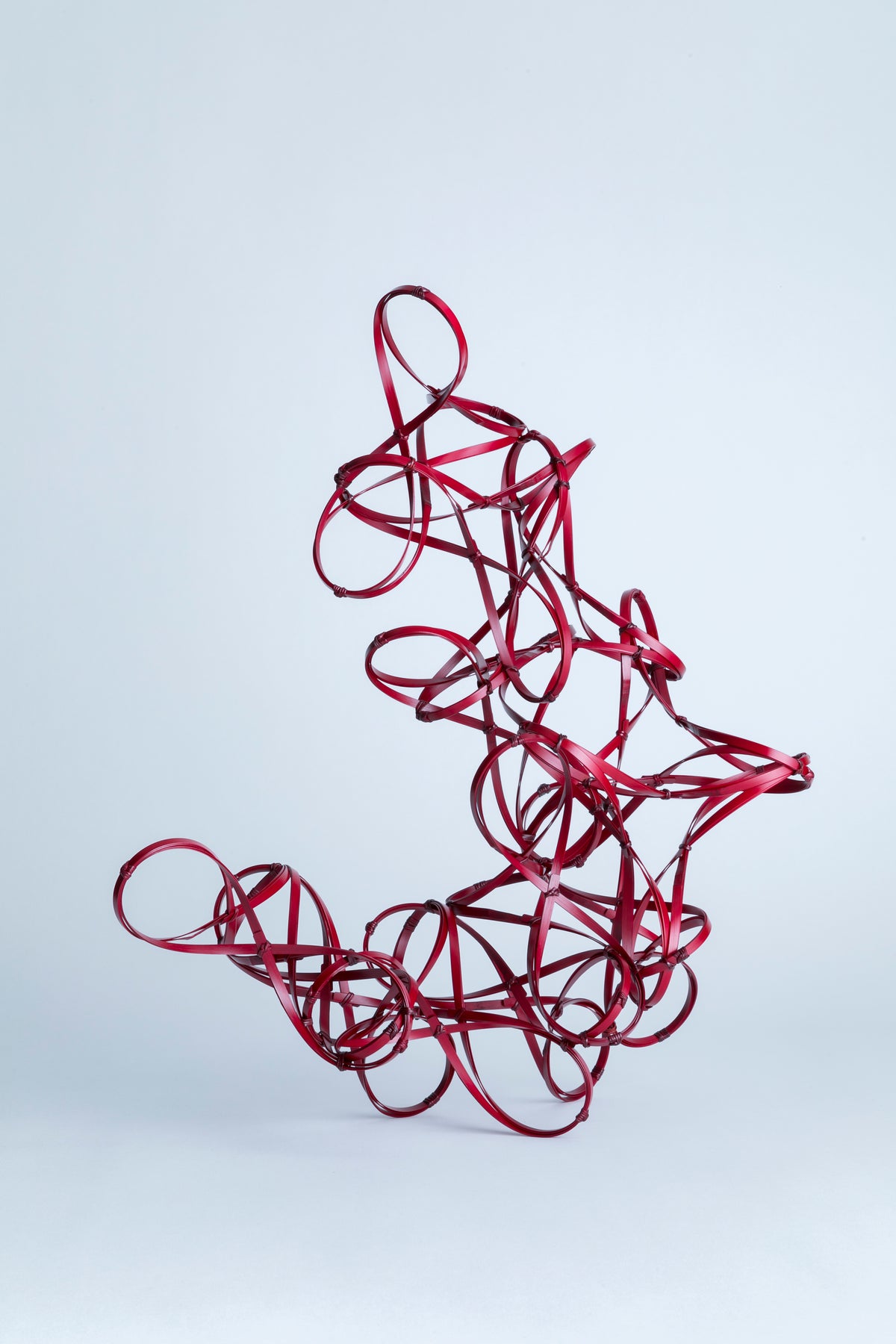
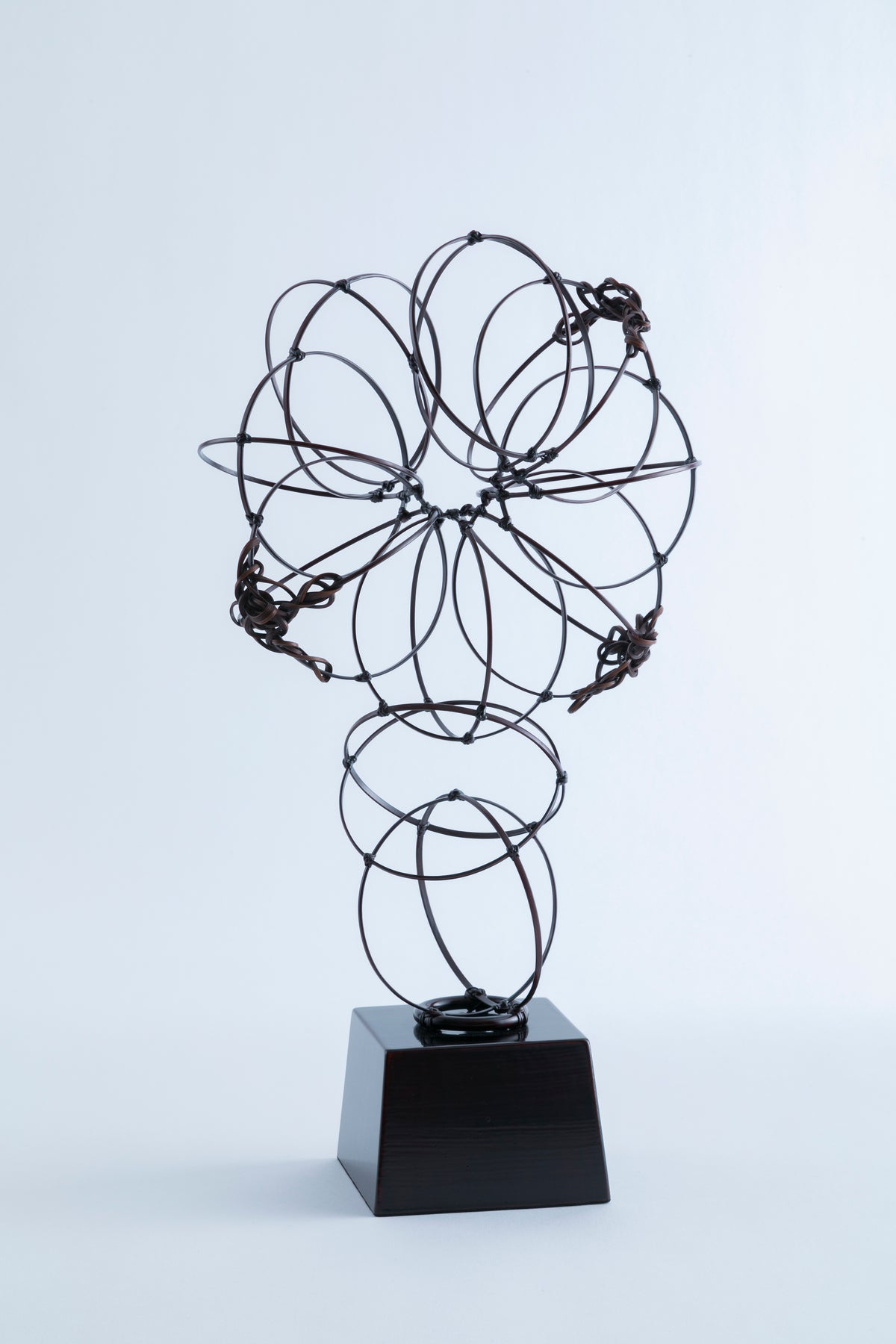
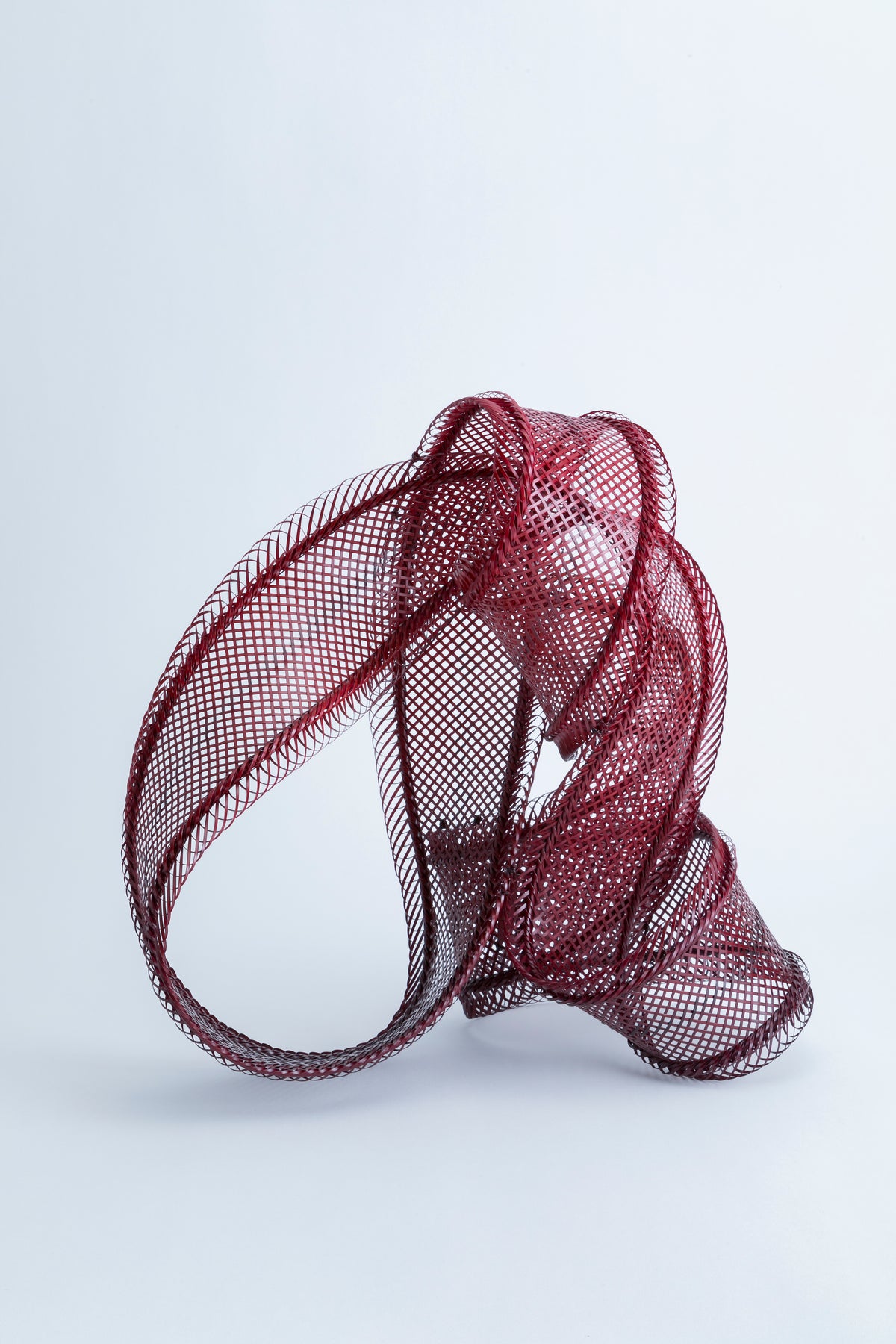
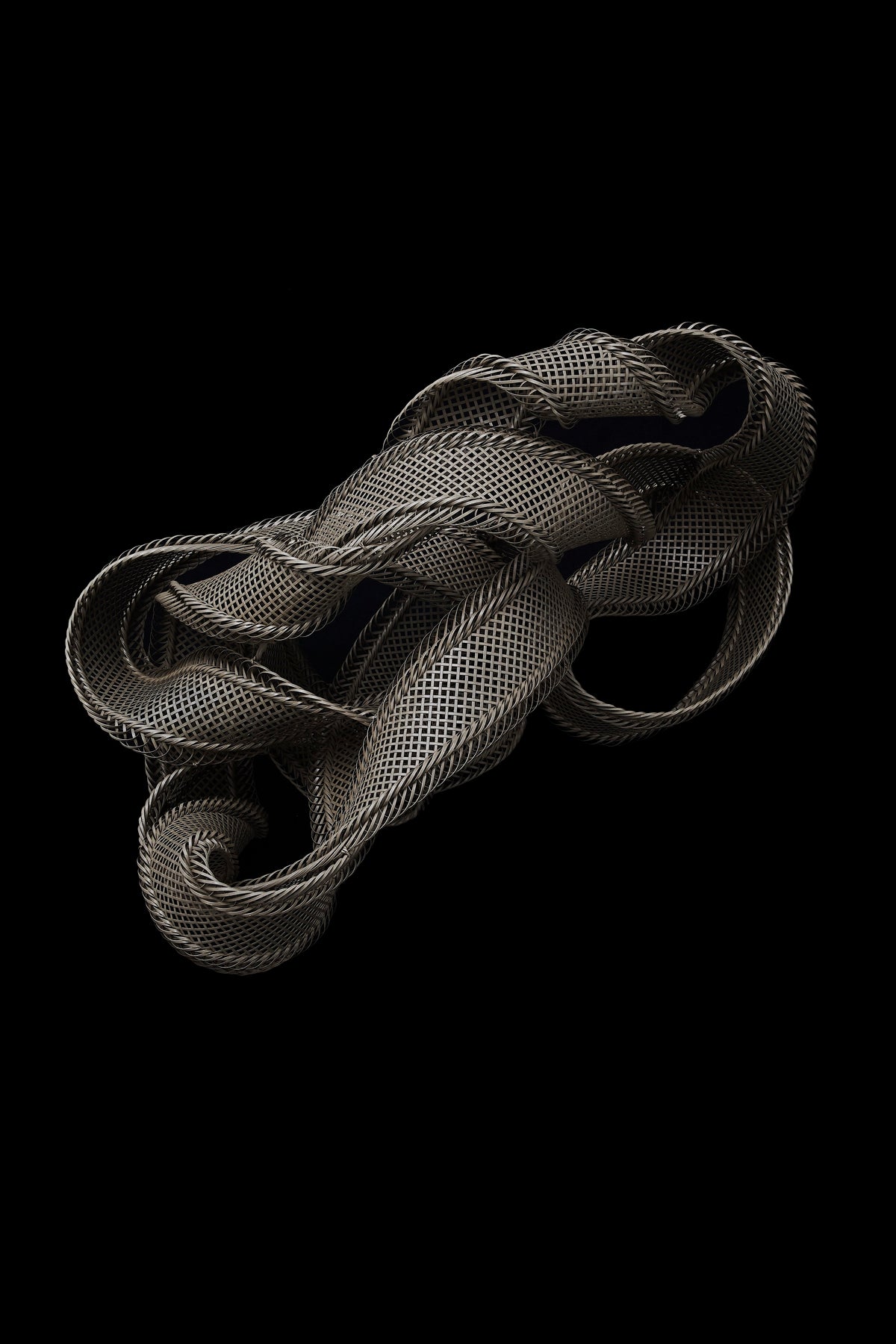
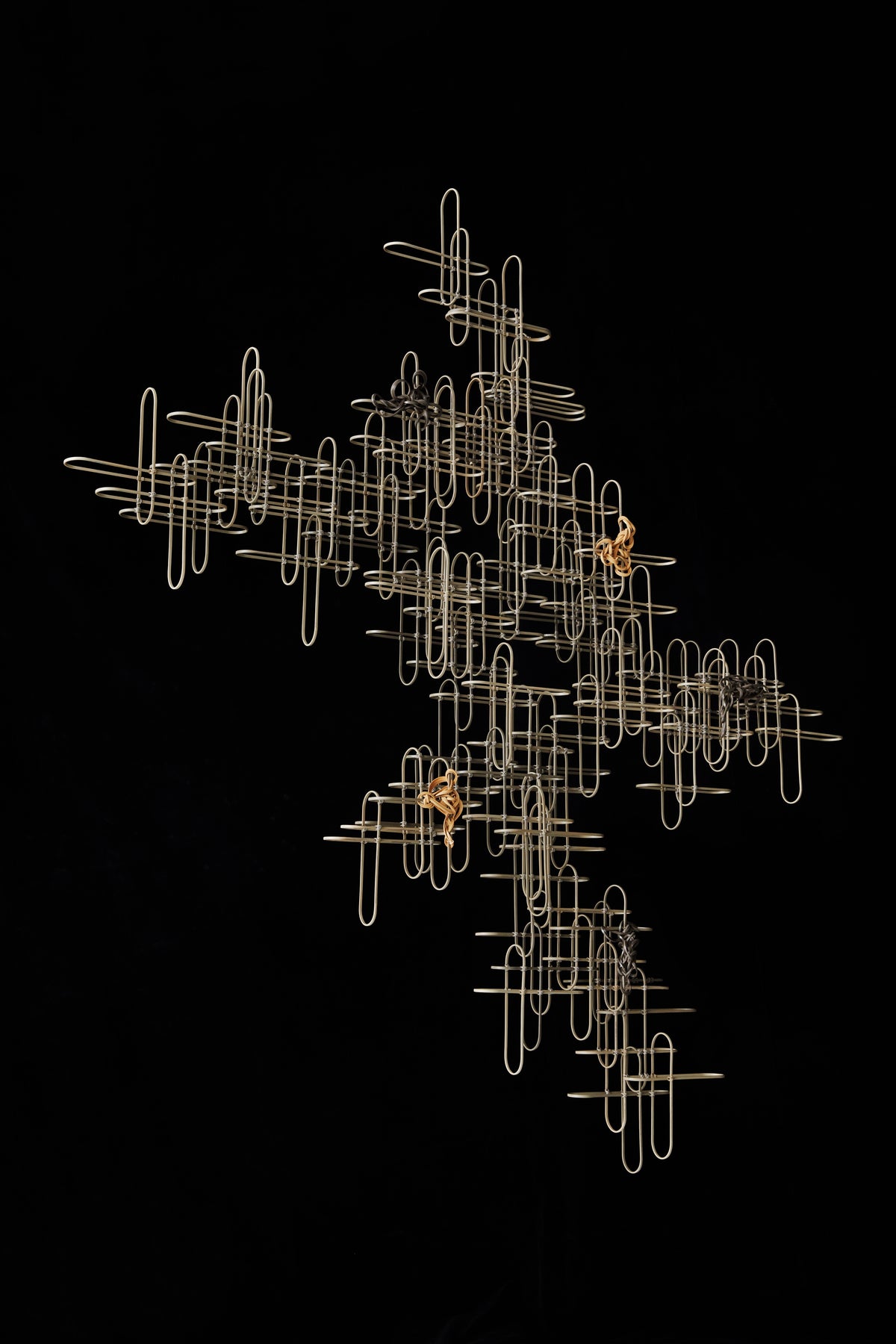
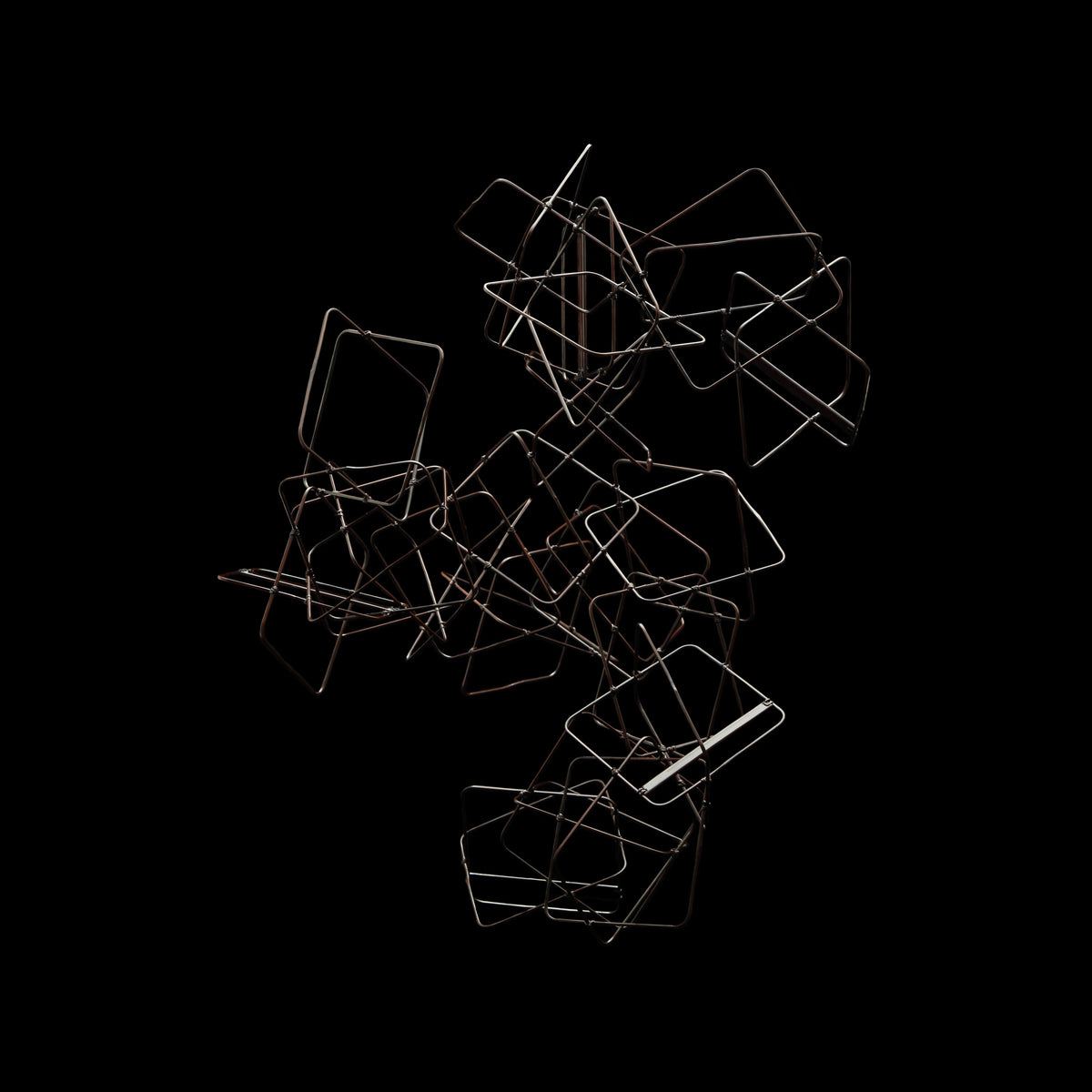
The connection of repeated motifs creates a relaxed form. A straight line of bamboo eventually draws a curve, and the curve becomes a straight line again. They meet, separate, and then intersect again. Straight lines aiming for different directions meet again after some time. The rhythmic repetition seen in works such as Frill, Hachihogu, and Prism evokes the continuity of life and the resonance between lives. The soft light that appears through the shapes and the delicate shadows cast at the feet of the work also become part of the work. The work itself and the pure and warm atmosphere it creates give us a sense of foreboding.
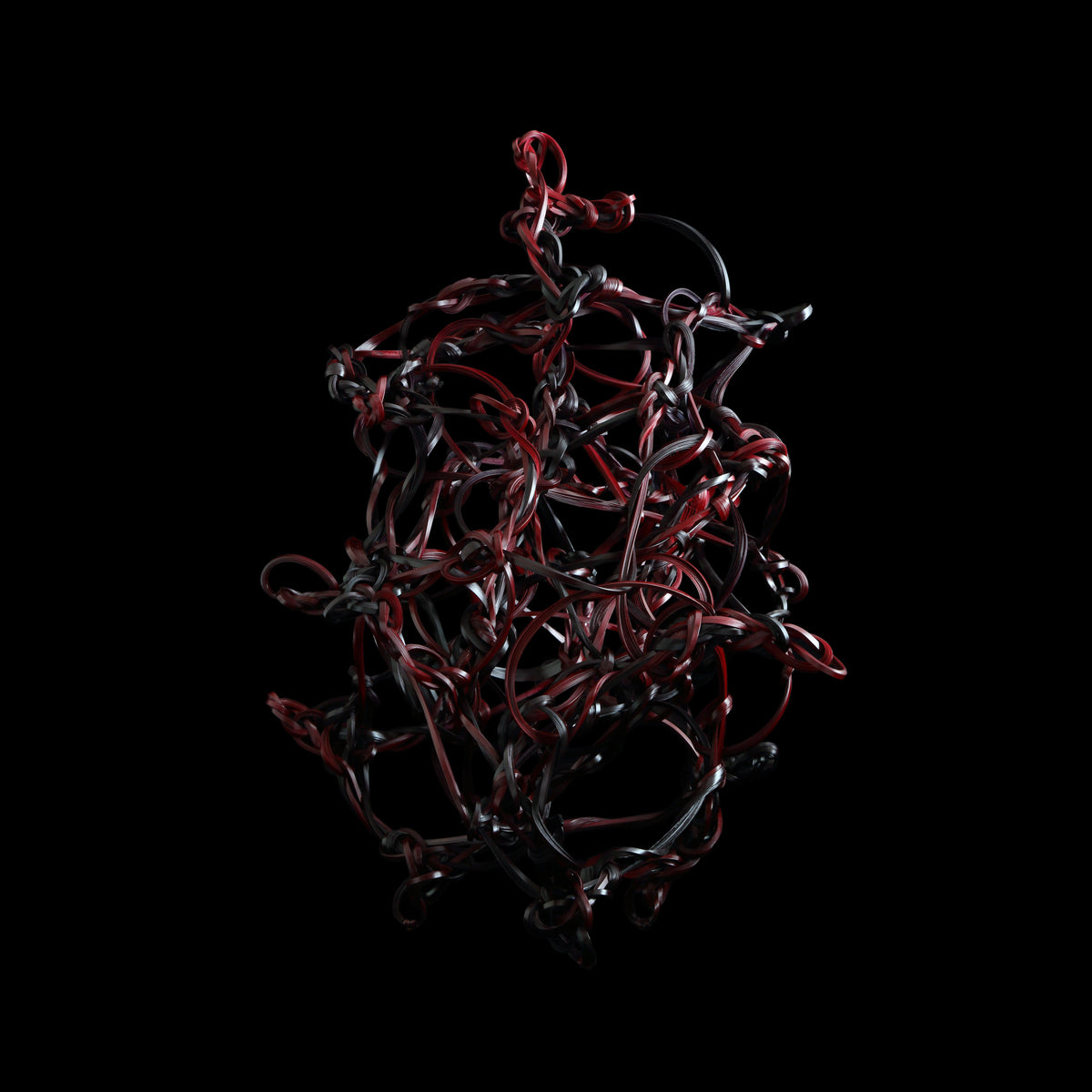
The motif extends rhythmically, the carefree shapes it composes, and the vibrant colors. They remind me of the contented feeling I feel when I have just woken up from a nap and stretched out my limbs. Apart from the charm of expression that shows an outpouring of passion and a torrent of emotion, there is a calm, somewhat intellectual, yet secret dynamic of life and its joy that radiates from every corner of the work.
Bamboo is a material with many restrictions. Higo is useless if it is too thin or too thick. It also does not have the high plasticity of clay or metal. That's why. During the production process, I stop to look at the scenery that appears from time to time and listen to the voice of the bamboo. This opens up unexpected prospects. For example, in the case of the ``Smiling Mouth Bamboo Vase,'' even the knots of bamboo that were supposed to be completely removed with a mallet are used in the work, leaving the openings that look like smiling mouths.
The repeated dialogue with bamboo continues to expand the style. In this way, Nakatomi plays freely with the bamboo, and with the joy of it, he easily overcomes the constraints.
Nakatomi was born in Osaka and went to a prestigious university in Tokyo, where he studied at the Faculty of Commerce. While he was attracted to the world of crafts since his student days and aspired to become a potter, he came across bamboo while searching for a new material that would suit him. An encounter with the works of Shōunsai Ikuno. I learned about the Oita Prefectural Bamboo Crafts Training Center at a bamboo crafts exhibition. His mentor, Seiryu Honda, and the production space he found in Takeda, as well as his encounters with his friends. The fact that Takeda was the place of the life of the literary figure Tanomura Takeda, whom I learned about through my enjoyment of the Sencha tea ceremony, also gives me a sense of the connection. In this way, a number of coincidences with bamboo have led Nakatomi to this world today.
Nakatomi describes what is happening now as ``inevitability and destiny.'' This is the result of a continuous response between Nakatomi, who has accepted many coincidences and flexibly aligned himself with the meaning of those coincidences, and bamboo and the world surrounding bamboo crafts. Love the inevitable and nurture it into your destiny. And now I stand here.
A refreshing breeze blows from Takeda, Oku Bungo. Like a pure breeze blowing through a bamboo forest, that breeze brings us a healthy heart and the joy of life, and foreshadows the days that will continue to unfold one day at a time.
Bamboo art houseHajime Nakatomi. Against the backdrop of fertile nature and a long-standing bamboo culture, his work leaps vividly across the frame while remaining rooted in tradition.
B-OWND
The connection of repeated motifs creates a relaxed form. A straight line of bamboo eventually draws a curve, and the curve becomes a straight line again. They meet, separate, and then intersect again. Straight lines aiming for different directions meet again after some time. The rhythmic repetition seen in works such as Frill, Hachihogu, and Prism evokes the continuity of life and the resonance between lives. The soft light that appears through the shapes and the delicate shadows cast at the feet of the work also become part of the work. The work itself and the pure and warm atmosphere it creates give us a sense of foreboding.
The motif extends rhythmically, the carefree shapes it composes, and the vibrant colors. They remind me of the contented feeling I feel when I have just woken up from a nap and stretched out my limbs. Apart from the charm of expression that shows an outpouring of passion and a torrent of emotion, there is a calm, somewhat intellectual, yet secret dynamic of life and its joy that radiates from every corner of the work.
Bamboo is a material with many restrictions. Higo is useless if it is too thin or too thick. It also does not have the high plasticity of clay or metal. That's why. During the production process, I stop to look at the scenery that appears from time to time and listen to the voice of the bamboo. This opens up unexpected prospects. For example, in the case of the ``Smiling Mouth Bamboo Vase,'' even the knots of bamboo that were supposed to be completely removed with a mallet are used in the work, leaving the openings that look like smiling mouths.
The repeated dialogue with bamboo continues to expand the style. In this way, Nakatomi plays freely with the bamboo, and with the joy of it, he easily overcomes the constraints.
Nakatomi was born in Osaka and went to a prestigious university in Tokyo, where he studied at the Faculty of Commerce. While he was attracted to the world of crafts since his student days and aspired to become a potter, he came across bamboo while searching for a new material that would suit him. An encounter with the works of Shōunsai Ikuno. I learned about the Oita Prefectural Bamboo Crafts Training Center at a bamboo crafts exhibition. His mentor, Seiryu Honda, and the production space he found in Takeda, as well as his encounters with his friends. The fact that Takeda was the place of the life of the literary figure Tanomura Takeda, whom I learned about through my enjoyment of the Sencha tea ceremony, also gives me a sense of the connection. In this way, a number of coincidences with bamboo have led Nakatomi to this world today.
Nakatomi describes what is happening now as ``inevitability and destiny.'' This is the result of a continuous response between Nakatomi, who has accepted many coincidences and flexibly aligned himself with the meaning of those coincidences, and bamboo and the world surrounding bamboo crafts. Love the inevitable and nurture it into your destiny. And now I stand here.
A refreshing breeze blows from Takeda, Oku Bungo. Like a pure breeze blowing through a bamboo forest, that breeze brings us a healthy heart and the joy of life, and foreshadows the days that will continue to unfold one day at a time.
Bamboo art houseHajime Nakatomi. Against the backdrop of fertile nature and a long-standing bamboo culture, his work leaps vividly across the frame while remaining rooted in tradition.
B-OWND

Hajime Nakatomi
- 1974 | Born in Izumi City, Osaka Prefecture
- 1999 | Graduated from Waseda University Faculty of Commerce
- 2000: Learned the basics of bamboo crafts at the Oita Prefectural Bamboo Crafts Training Center
- 2002: Studied under Bamboo artist Seiryu Honda
個展
- 2018
- SAKURA SHOP Ginza store, Takamatsu store
- 2013
- SAKURA SHOP Ginza store
- 2011
- SAKURA SHOP Takamatsu store
グループ展
- 2019
- WE WERE ALWAYS HERE (HEATHER JAMES FINE ART/San Francisco, USA)
- 2018
- Oriental Bamboo Asia Bamboo Living Art Exhibition (China Academy of Fine Arts Folk Art Museum/Hangzhou, China)
- 2017 | Bamboo Ruins Contemporary International Bamboo Art Exhibition (National Taiwan Crafts Research and Development Center Taipei Branch/Taipei, Taiwan)
- 2013
- REVALUE NIPPON PROJECT “CHARITY GALA 2013 with GUCCI” (Yokohama Royal Park Hotel/Yokohama)
- 2010
- Salone Del Mobile, Bottega Veneta Home Collection (Bottega Veneta/Milan, Italy)
- 2008
- New Bamboo: Contemporary Masters (Japan Society Gallery/New York, USA)
- 2007
- East Weaves West: Basketry from Japan and Britain (Collins Gallery of Strathclyde University/Glasgow, UK)
- 2006
- Beyond Basketry: Japanese Bamboo Art (Boston Museum of Fine Arts/Boston, USA)
- 2004
- Contemporary Japanese Crafts (Japan-America Cultural Center/Los Angeles, USA)
コレクション
- San Francisco Asian Art Museum
- Philadelphia Museum of Art
- Hove Art Museum
- Racine Museum of Art
- Fukuoka Airport
- Osaka International Airport
- The Ritz Carlton Kyoto
- The Ritz Carlton Tokyo
- Hyatt Regency Naha Okinawa
- ANA InterContinental Beppu Resort & Spa
教育歴
- 2019
- Musashino Art University “New dimension of Bamboo Craft: Bringing indigenous techniques to the world”
- 2017
- Embassy of Japan in Brazil “The Path to Contemporary Japanese Bamboo Art” (Brasilia, Brazil)
- 2017
- National Taiwan Crafts Research and Development Center Taipei Branch “Japanese Bamboo Art History and My Own Works” (Taipei, Taiwan)
- 2009
- National Taiwan Crafts Research and Development Center “About Japanese Bamboo Crafts” (Nantou County, Taiwan)
- 2008
- Saga University Karatsu Project “About Bamboo and Bamboo Crafts” (2008, 2009, 2010)
- 2004
- Japan-America Cultural Center “About Japanese Bamboo Crafts” (Los Angeles, USA)