

bamboo craftsman
Chikuunsai Tanabe
Creation, destruction and connection
This world is made up of a constant cycle of creation and destruction, and interconnectedness.
Our bodies are maintained by the repeated birth and death of cells called metabolism every day, and by continuing exchange and circulation with other living things. Life is an equilibrium maintained in a state of constant change. The born star begins to expand and eventually dies in a supernova explosion, but the fragments created by the explosion encourage the birth of the next star. From the microscopic to the macroscopic, the universe is made up of ``creation and destruction'' and mutual ``connections.''
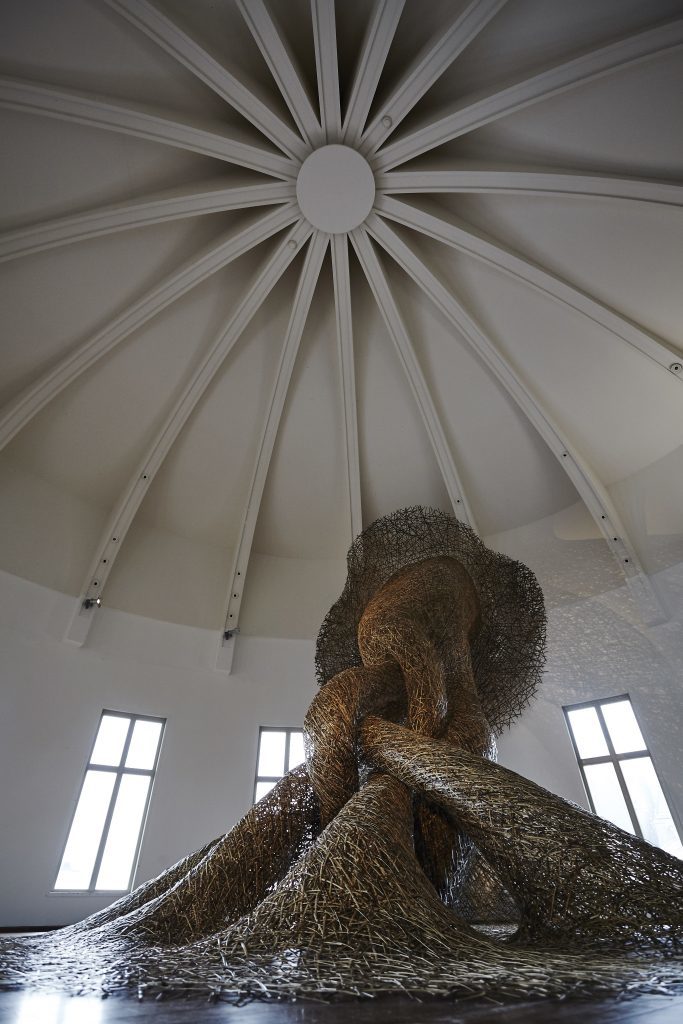
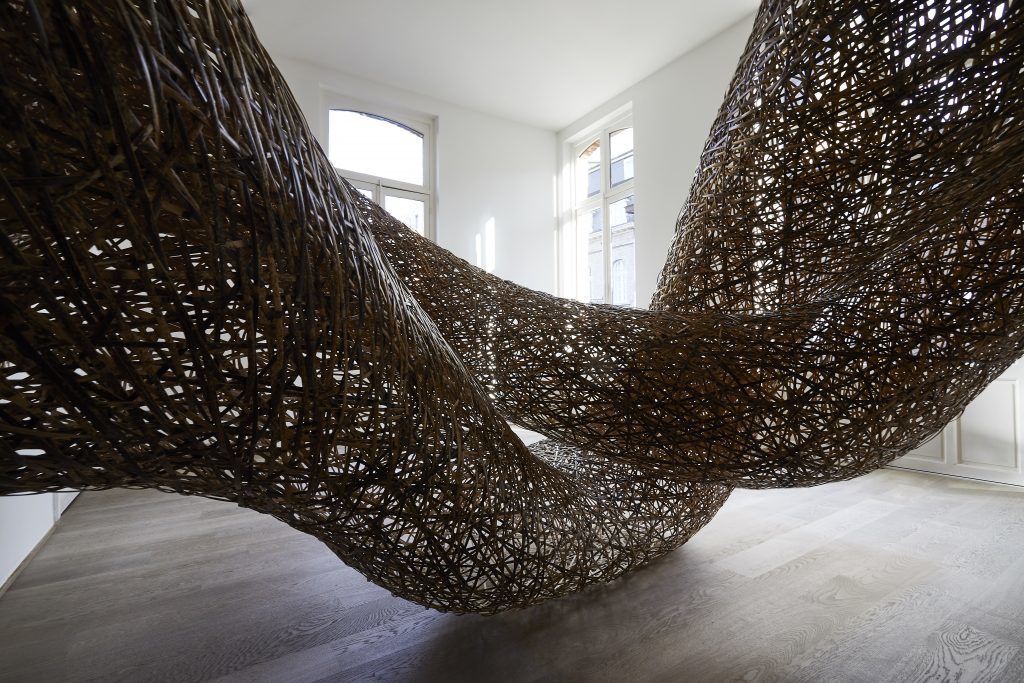
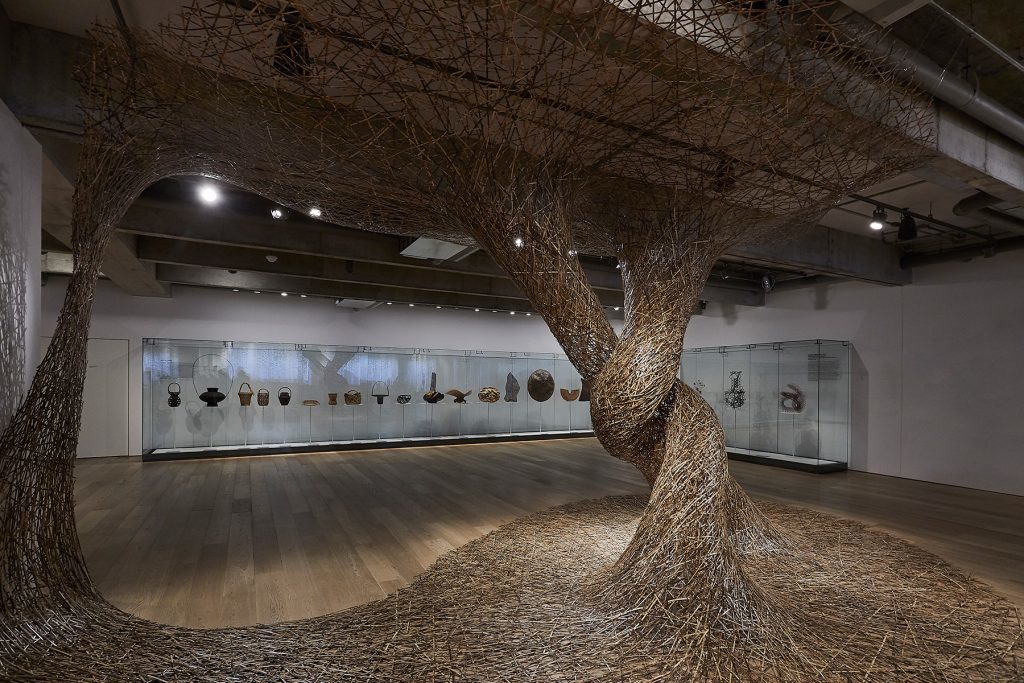
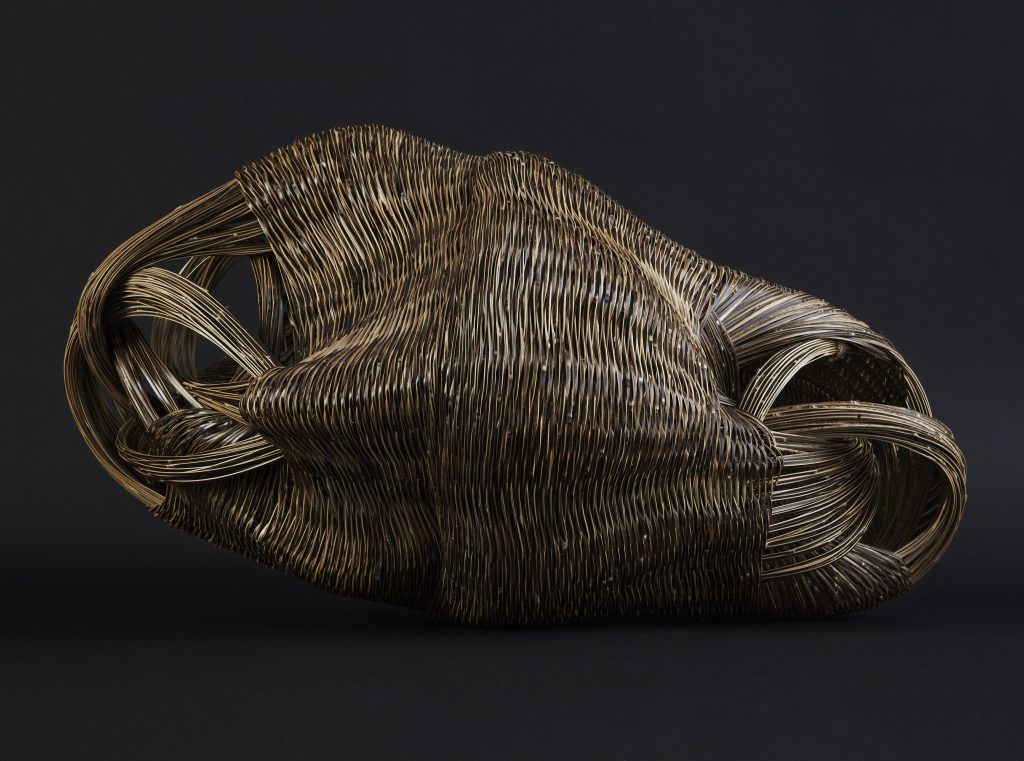
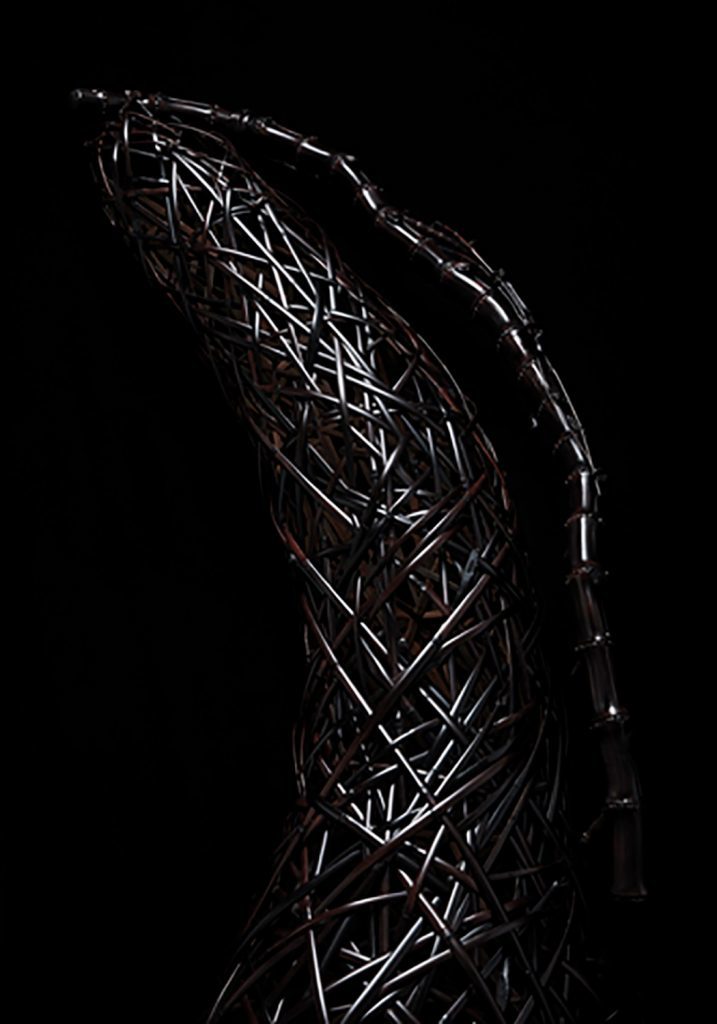
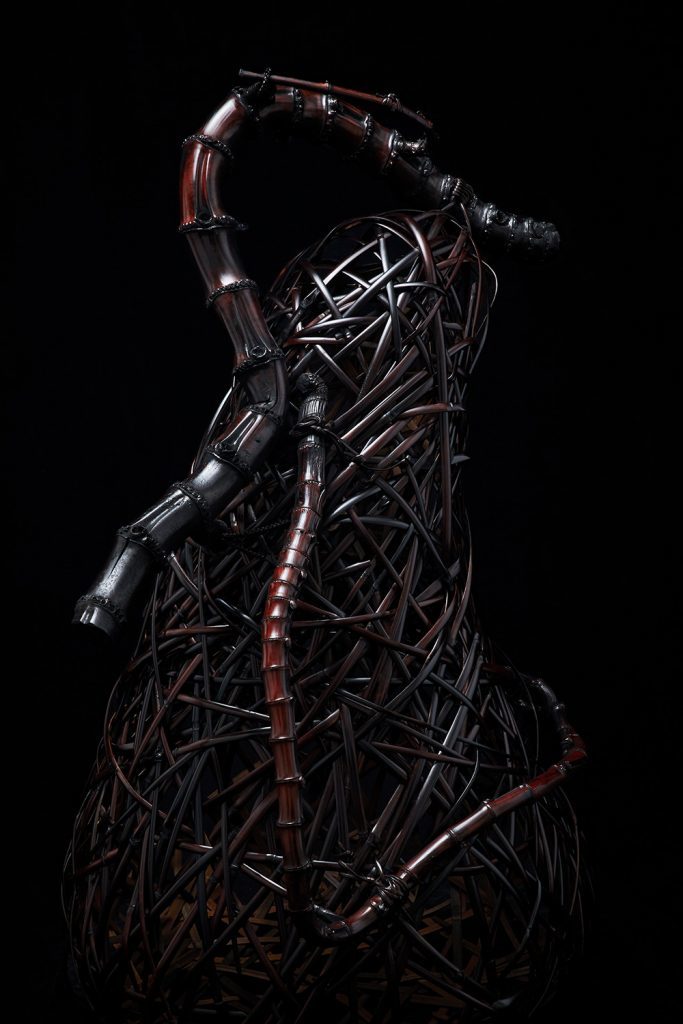
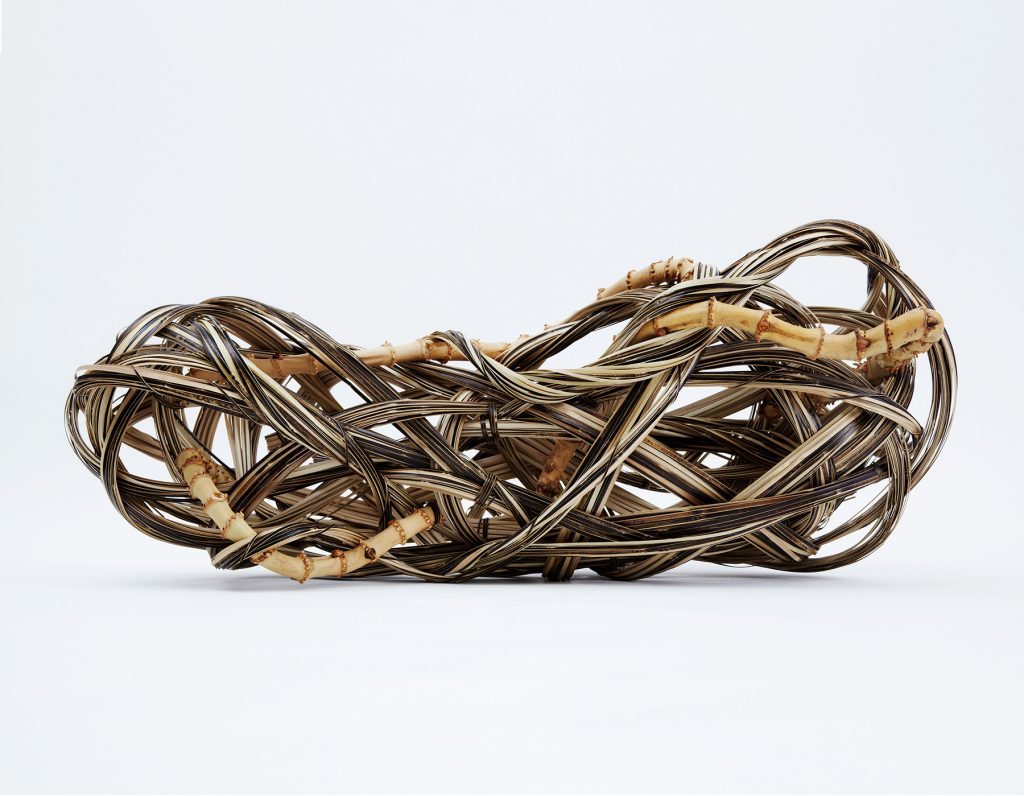
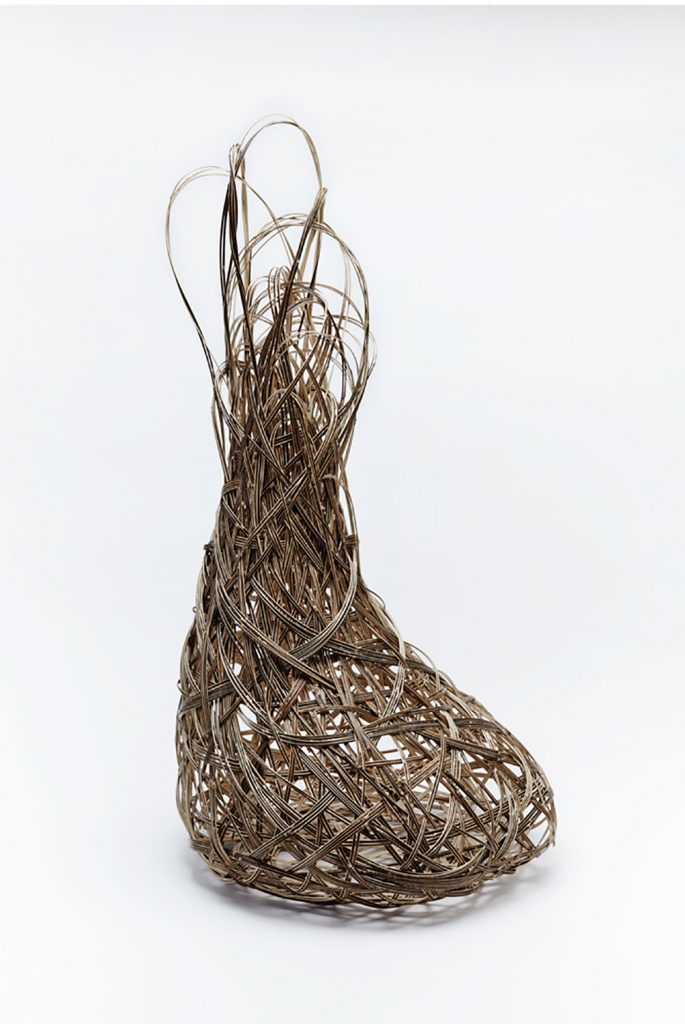
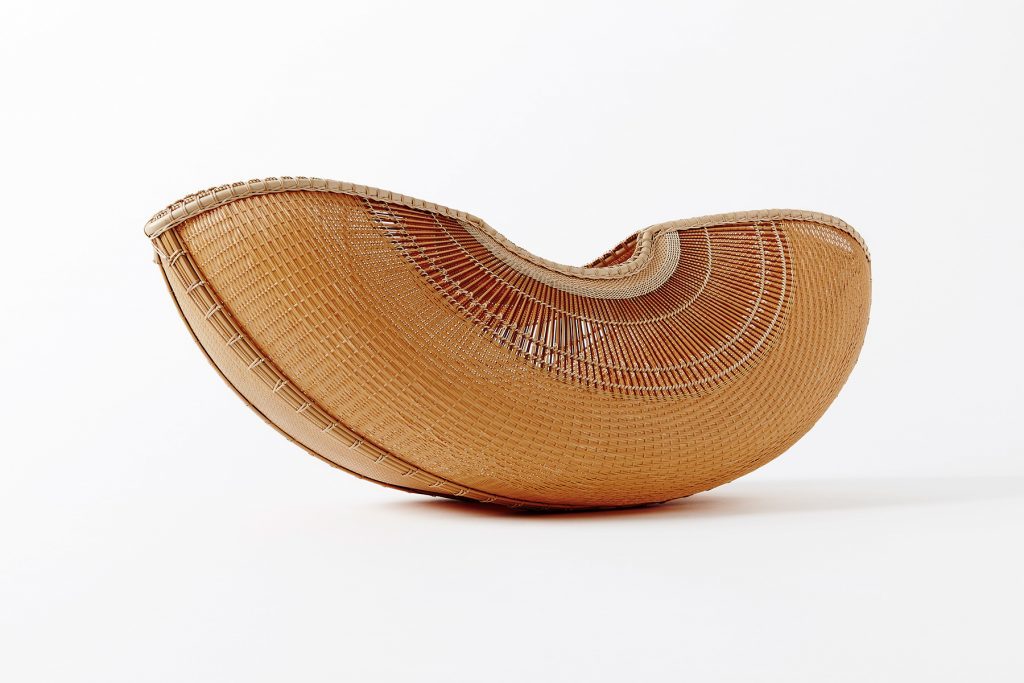
The works of fourth-generation bamboo craftsman Chikuunsai Tanabe incorporate ``creation and destruction'' and ``interrelation with an awareness of connections.'' His representative installation works are not only impressive in scale, but also take the viewer's breath away with the delicateness of the densely woven bamboo.
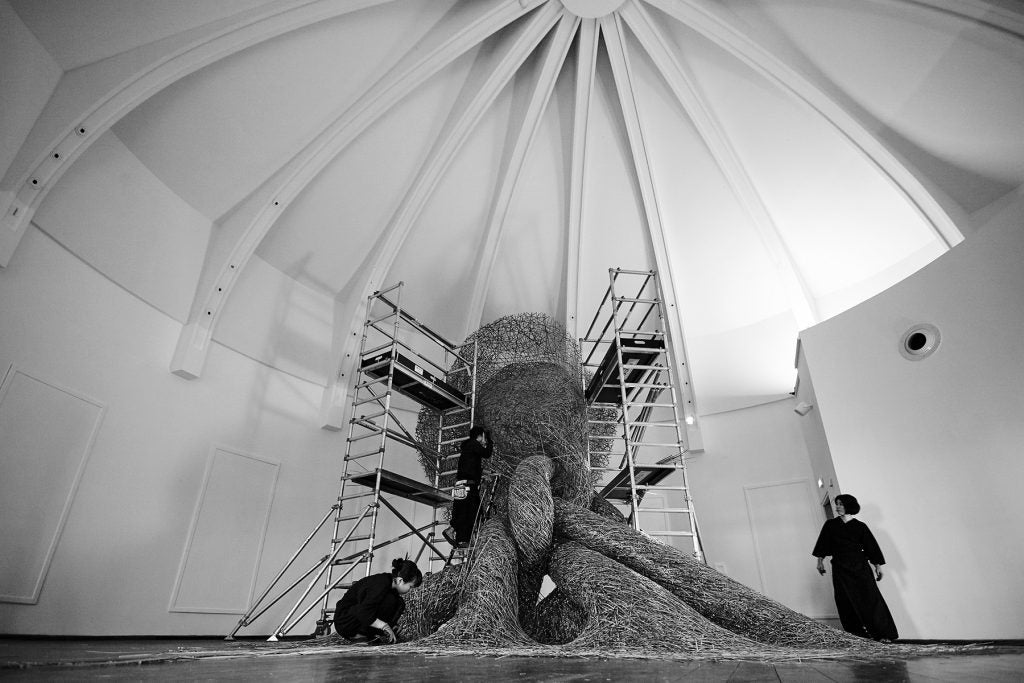
This beautiful installation work, which uses no adhesives or other materials and is simply made up of bamboo pieces stacked on top of each other, will be completely dismantled once the exhibition period ends. That's why it is woven using a technique that allows the bamboo strips to unravel when pulled. Although some of the unraveled bamboo can no longer be used, much of it is reused and combined with new materials to create the next work.
Just like cells, there are things that die and things that are born, and these two are in circulation.Tanabe's wishes are always reflected in his works. It is a connection between life and life, between people, and between people and nature. Tanabe's representative installation works are titled ``Five Great''. The Five Greats are an ancient Indian idea that refers to the five elements that make up the universe: earth, water, fire, wind, and sky. Bamboo roots in the earth, absorbs water from the earth, is exposed to the fire of the sun, and is strengthened by the wind as it flexibly grows toward the sky. The fundamental thing that brings about this exquisite interconnectedness is ``emptiness.'' It is a concept that is neither existence nor nothing, but is the basis of everything, and is similar to the concept of zero discovered by Indians.
The fourth generation of the Tanabe family, who inherits the history of bamboo crafts for over 120 years.
One of the teachings of the Tanabe family is that ``tradition is a challenge.'' Rather than sticking to a formal format, he continues to challenge creation and destruction without hesitation. While inheriting the essence of the expressions and techniques of his predecessors, he has taken on new challenges while discerning his own individuality. One of the fruits of this effort is an installation work by the fourth generation. The cycle of creation and destruction in materials. Creation and destruction in history. I believe that works that incorporate both of these aspects will make people feel even the invisible reality of ``sky'' through powerful images.
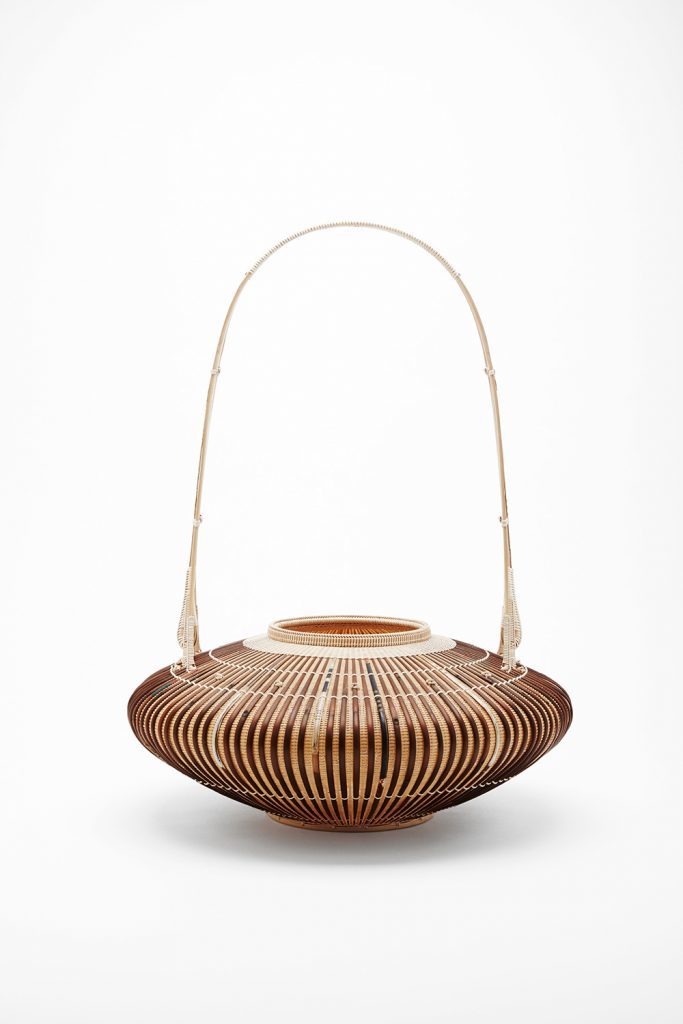
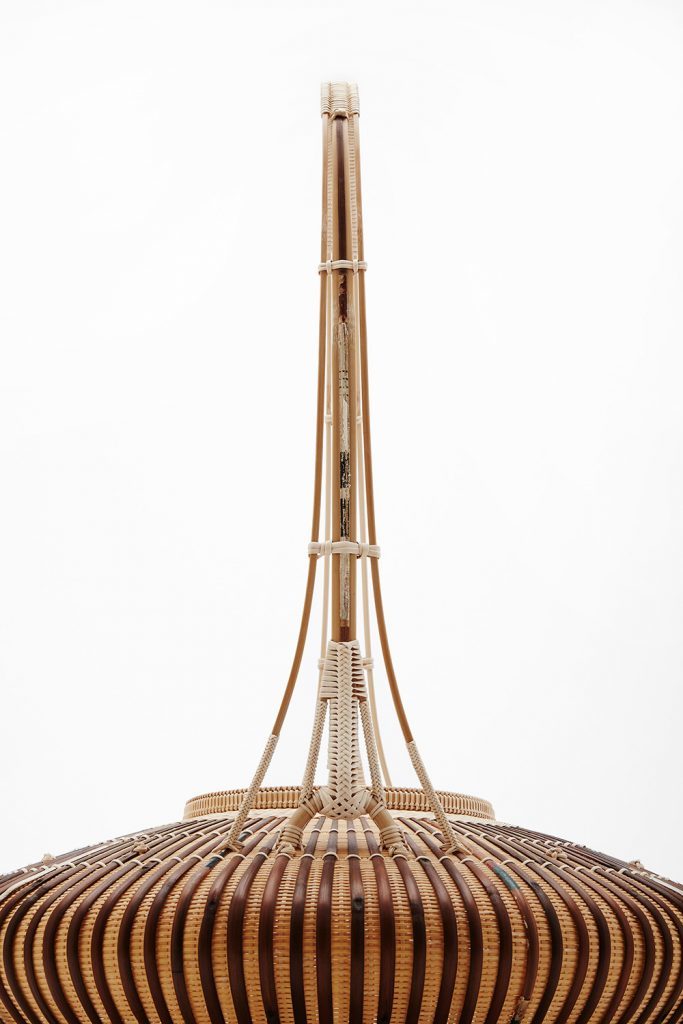
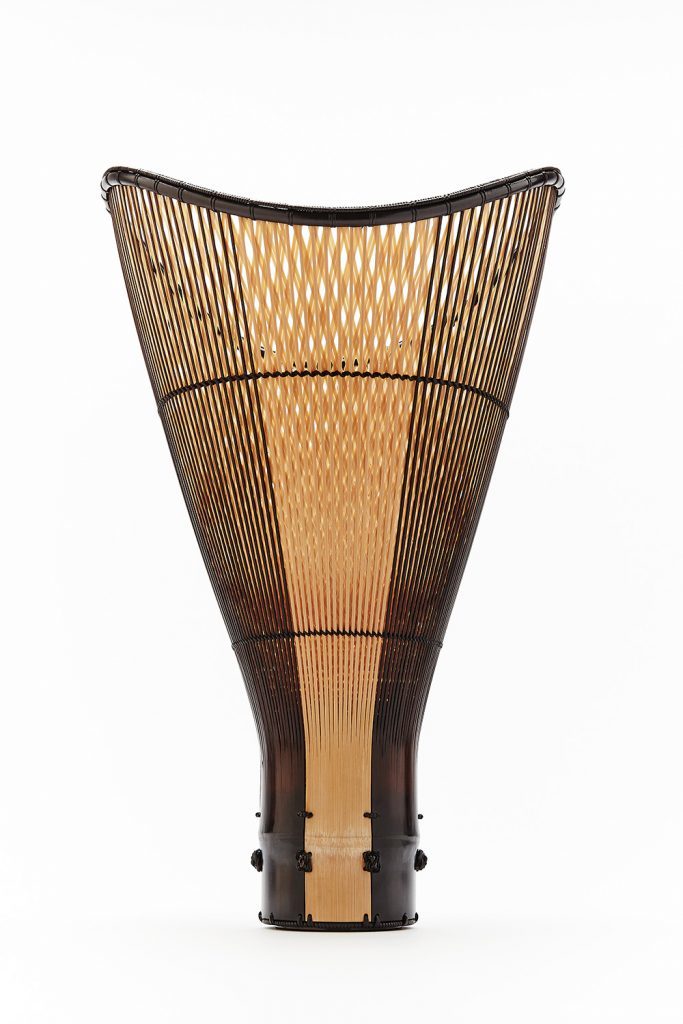
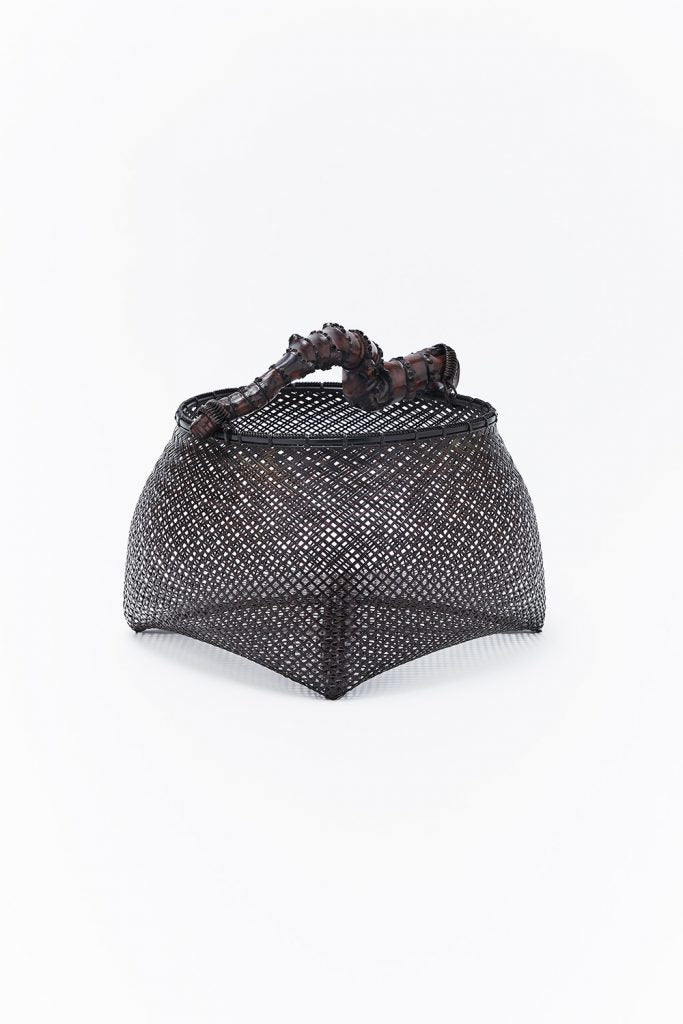
The taut yet supple and elegant expression of bamboo crafts.Above all, the warmth that comes from the life of bamboo. The works of Chikuunsai Tanabe IV evoke deep within us the continuity of life and the countless interconnected relationships. It makes us rediscover our original relationship with this world, and it seems to symbolize the never-ending connection between past, present, and future.
B-OWND
Our bodies are maintained by the repeated birth and death of cells called metabolism every day, and by continuing exchange and circulation with other living things. Life is an equilibrium maintained in a state of constant change. The born star begins to expand and eventually dies in a supernova explosion, but the fragments created by the explosion encourage the birth of the next star. From the microscopic to the macroscopic, the universe is made up of ``creation and destruction'' and mutual ``connections.''
The works of fourth-generation bamboo craftsman Chikuunsai Tanabe incorporate ``creation and destruction'' and ``interrelation with an awareness of connections.'' His representative installation works are not only impressive in scale, but also take the viewer's breath away with the delicateness of the densely woven bamboo.
This beautiful installation work, which uses no adhesives or other materials and is simply made up of bamboo pieces stacked on top of each other, will be completely dismantled once the exhibition period ends. That's why it is woven using a technique that allows the bamboo strips to unravel when pulled. Although some of the unraveled bamboo can no longer be used, much of it is reused and combined with new materials to create the next work.
Just like cells, there are things that die and things that are born, and these two are in circulation.Tanabe's wishes are always reflected in his works. It is a connection between life and life, between people, and between people and nature. Tanabe's representative installation works are titled ``Five Great''. The Five Greats are an ancient Indian idea that refers to the five elements that make up the universe: earth, water, fire, wind, and sky. Bamboo roots in the earth, absorbs water from the earth, is exposed to the fire of the sun, and is strengthened by the wind as it flexibly grows toward the sky. The fundamental thing that brings about this exquisite interconnectedness is ``emptiness.'' It is a concept that is neither existence nor nothing, but is the basis of everything, and is similar to the concept of zero discovered by Indians.
The fourth generation of the Tanabe family, who inherits the history of bamboo crafts for over 120 years.
One of the teachings of the Tanabe family is that ``tradition is a challenge.'' Rather than sticking to a formal format, he continues to challenge creation and destruction without hesitation. While inheriting the essence of the expressions and techniques of his predecessors, he has taken on new challenges while discerning his own individuality. One of the fruits of this effort is an installation work by the fourth generation. The cycle of creation and destruction in materials. Creation and destruction in history. I believe that works that incorporate both of these aspects will make people feel even the invisible reality of ``sky'' through powerful images.
The taut yet supple and elegant expression of bamboo crafts.Above all, the warmth that comes from the life of bamboo. The works of Chikuunsai Tanabe IV evoke deep within us the continuity of life and the countless interconnected relationships. It makes us rediscover our original relationship with this world, and it seems to symbolize the never-ending connection between past, present, and future.
B-OWND
bamboo craftsman
Chikuunsai Tanabe
- 1973 | Third generation in Sakai City, Osaka PrefectureChikuunsai TanabeBorn as the second son of
- 1999 | Graduated from Tokyo University of the Arts, Department of Sculpture, Faculty of Fine Arts
- 2000: Received 2 years of bamboo training at Oita Prefecture Bamboo Crafts Training Support Center
個展
- 2018
- “Mingei Japanese Arts” (Paris, France)
- 2017
- “Fourth Generation Tanabe Chikuunsai Exhibition” Osaka Takashimaya (Osaka), Nihonbashi Takashimaya (Tokyo)
- 2017
- Bamboo installation production -CONNECTION- DSA Japan Spatial Design Award Silver Award Nihonbashi Takashimaya (Tokyo)
- 2017
- “Tanabe Chikuunsai Exhibition GODAI” Pierre Marie Giraud gallery (Brussels, Belgium)
- 2017
- Bamboo installation production -Resonance-
- 2016
- Bamboo installation production -Five majors- French National Museum of Oriental Guimet (France)
- 2015
- “Mingei Japanese Arts” (Paris, France)
- 2014
- “ZEN” Pierre Marie Giraud gallery (Brussels/Belgium)
- 2012
- Bamboo installation production -Heaven and Earth- Masaki Museum of Art (Osaka)
- 2011 | “Tanabe Kotake Exhibition” JR Nagoya Takashimaya (Nagoya)/Osaka Takashimaya (Osaka)
- 2011 | “The World of Bamboo Craftsman Kotake Tanabe” Important Cultural Property Yamaguchi Family Residence (Osaka)
- 2010
- “Connection -∞-” Nihonbashi Takashimaya Gallery X (Tokyo)
- 2008
- “Tanabe Kotake Succession Exhibition” Osaka Takashimaya (Osaka)2007|Art Interactive Tokyo (Tokyo)
- 2006
- "Grand Hotel Villa Castagnola" (Lugano, Switzerland)
- 2005
- “Tsunagi II” Wacoal Ginza Art Space (Tokyo)
- 2003
- “Connection” Wacoal Ginza Art Space (Tokyo)
- 2002
- “Connection” Cortland Jessup Gallery (New York, USA)
グループ展
- 2018
- “Japanese bamboo crafts that split the sky” Quai Branly Museum (Paris, France)
- 2018
- “Line form, line space: Bamboo crafts with Iizuka Rokansai and Tanabe Chikuunsai” Kikuchi Kanmichi Museum of Art (Tokyo)
- 2018
- Bamboo installation production - Roots - Chateau de Chaumont (Loire region, France)
- 2018
- Bamboo installation production - present, past, and future -
- 2018
- “Fusion of Crafts - Discovering Traditional Ashita” Ginza Wako (Tokyo)
- 2017
- “83 Treasures of the Heisei Era” Yakushiji Temple (Nara)
- 2017
- Bamboo installation production -GATE-
- 2017
- Ministry of Foreign Affairs overseas base project “Bamboo – Fiber built Japan” JAPAN HOUSE (São Paulo, Brazil)
- 2017
- “Japanese Bamboo Art: The Abbey Collection” Metropolitan Museum of Art (New York, USA)
- 2017
- Bamboo installation production -CONNECTION-
- 2016
- “Innovative Crafts” National Museum of Modern Art, Tokyo Crafts Gallery (Tokyo)
- 2016
- “Biennale des Antiquaires” Grand Palais (Paris, France)
- 2016 | “63rd Japan Traditional Crafts Exhibition” Japan Crafts Association Encouragement Award2016
- “Fusion of Crafts - A Story of a Hermit Crab on a Journey” Osaka Takashimaya (Osaka)
- 2015
- Takashimaya Art Award Winner
- 2015
- Bamboo installation production -Beyond connection- French Guest House (La Celle-Saint-Cloud France)
- 2015 | Lectures and workshops in 4 cities in Florida, USA (USA)
- 2015
- “MODERN TWIST ― Contemporary Japanese Bamboo Art” Ruth Funk Center for Textile Arts (USA)
- 2015
- “Kukai and Mt. Koya 1200 Years: Kotake Tanabe and Takashi Wakamiya Exhibition Bamboo x Lacquer” Osaka Takashimaya (Osaka), Nihonbashi Takashimaya (Tokyo)
- 2015
- "44th Japanese Traditional Crafts Kinki Exhibition" Japanese Traditional Crafts Kinki Award
- 2014
- “Tanabe Chikuunsai Successive Exhibition” Osaka Takashimaya (Osaka)
- 2014
- “62nd Ise Jingu Shikinen Sengu” Purchase of kudzu woven baskets
- 2014
- “Enku Grand Prize Exhibition” Enku Prize Gifu Prefectural Museum of Art (Gifu)
- 2014 | “The Beauty of Crafts - Japanese Crafts Exhibition” Singapore-Japan Creative Center (Singapore)
- 2014
- “Fusion of Crafts - The Future of Tradition that Encounters Lead to” Ginza Wako (Tokyo)2013 | “Price Collection Jakuchu Tanabe Kotake/Hikoju Maki-e Exhibition Bamboo x Lacquer” Osaka Takashimaya (Osaka), Nihonbashi Takashimaya (Tokyo)
- 2013
- “Contemporary Kogei Styles in Japan” Dispatched by the Agency for Cultural Affairs for lectures and demonstrations Morikami Museum of Art (USA)
- 2012
- Cabinet Office “JAPAN NEXT EXHIBITION” Musée des Arts Décoratifs, Paris (France), MAD Museum (New York, USA)
- 2012
- “Design Basel” 2012~ 2016 (Basel Switzerland)
- 2012
- Selected and awarded by the Cabinet Secretariat National Strategy Office for the “Project of Japanese people who are active in the world and promote ``Japan''”
- 2012
- “59th Japanese Traditional Crafts Exhibition” Purchased by the Imperial Household Agency
- 2010
- “Modern Master” Bayern Prize (Munich, Germany)
- 2009
- “Collect Art Fair” 2009~2015 (London, UK)
- 2009
- “Asian Art in London” Gallery 21 (London, UK)
- 2008
- “Successive Chikuunsai Exhibition” Thai Gallery (Santa Fe America)
- 2008
- Lectures and workshops on bamboo crafts in three South American countries (Peru, Bolivia, Ecuador)2008 | “Japan Foundation Japanese Culture Introduction Dispatch Project”
- 2008
- “New Bamboo” New York Japan Society (USA)
- 2007
- “Beyond Basketry” Invited exhibition/lecture Boston Museum of Fine Arts (USA)
- 2007
- Received “COTSEN bamboo prize” San Francisco Asian Art Museum (USA)
- 2007
- “East Weaves West” Toured Collins Gallery, Hove Art Museum, etc. (UK)
- 2006
- “Golden week on Japanese Art” invited exhibition/lecture, Seattle Asian Art Museum (USA)
- 2006
- “Chikuunsai Historical Exhibition” Shamanry Institute of Japanese Art (USA)
- 2003
- “Japanese Bamboo Art Exhibition” production and invitation to exhibit at Zurich University Museum (Switzerland)
- 2001
- Invited to exhibit at “Philadelphia Museum of Art Craft Show” (USA)
コレクション
- Morikami Museum (USA), Gifu Prefectural Museum of Art (Gifu), French National Museum Guimet (France), Victoria Museum (Australia), Yakushiji Temple (Nara), Quai Branly Museum (France)
- Philadelphia Museum of Art (USA), Seattle Asian Art Museum (USA), Boston Museum of Fine Arts (USA), Long Beach Art Museum (USA), San Francisco Asian Art Museum (USA), Nissui Cultural Center (Peru), National Museum of Bolivia (Bolivia), British Museum (UK), Shermanly Institute of Japanese Art (USA), Imperial Household Agency, Minneapolis Institute of Art (USA), Victoria and Albert Museum (UK),